The most common question we get from new owners is "what do other small shops actually do with the Loyalteey app?" This is a tour through the patterns that show up again and again — across cafés, salons, barbershops, gyms, sari-sari stores, and tutoring centers — when a small business runs a loyalty rewards program for small business that actually grows the suki base.
The café pattern: birthdays + slow hours
Cafés tend to settle into two reliable habits within their first month. They turn on birthday rewards immediately, because the ROI is obvious within weeks. Then they layer a quiet off-peak multiplier — usually 2× points on weekday afternoons — to redistribute traffic away from rush.
The result is usually the same: weekend mornings stay packed (the program does not change that), but weekday afternoons slowly fill in with members chasing a reachable reward. The owner is not adding new traffic out of thin air; they are reshaping the traffic they already had.
The barbershop pattern: suki spotlight
Barbershops live and die by regulars. Owners use the suki list inside the Loyalteey app to identify their top 15–20 clients, then quietly offer them small extras — a free hot towel, a complimentary beard trim — that walk-ins do not get. They almost never announce it. The regulars notice. They tell their friends. The friends sign up to find out what they are missing.
The salon pattern: upgrade rewards
Salons figured out early that giving away free services is expensive. Instead, they reward loyalty with upgrades — a free scalp massage added to a regular service, a free treatment add-on at a milestone. The customer feels treated. The salon's revenue per visit goes up because the upgrade nudges them toward bigger services next time.
The sari-sari pattern: round-up rewards
Sari-sari stores have small tickets and huge frequency. They tend to use the simplest possible bracket — every peso earns a point — and offer cheap, high-emotion rewards like a free snack or drink. Birthday rewards work disproportionately well here because the whole neighborhood remembers the customer was treated.
The gym pattern: streaks
Gyms reward consistency. They use the streak idea: show up to class every week for a month, get a free protein bar or a free guest pass. Members brag about their streaks. The streak itself becomes the reward, with the prize as a bonus.
The tutoring center pattern: parent recognition
Tutoring centers reward the parent, not the student. They give birthday rewards for parents, milestone rewards for long-term enrollment, and quiet thank-you rewards for referrals. The Loyalteey app's per-store points work cleanly here because every center keeps its own wallet, even if the brand has multiple branches.
The multi-branch pattern
Owners on Pro Plus with multiple branches use a recurring move: they let customers earn at any branch but redeem only where they earned. That keeps each branch's unit economics clean while making the customer feel like one identity across the brand. The suki list still rolls up at the brand level, so the owner sees the full picture.
What every pattern has in common
Three things show up everywhere that works:
- Birthday rewards turned on from day one
- One simple bracket — added complexity comes later, not at launch
- A real human conversation at the counter inviting the customer to join
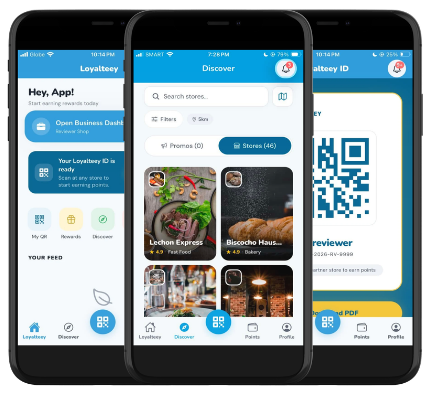
The Loyalteey app is one mobile app for both customers and owners — customers carry one Loyalteey ID across every participating store, and owners switch into business mode to run their entire loyalty rewards program for small business from the same device. The shops growing their suki base fastest are not the ones with the cleverest programs. They are the ones who started simple and stuck with it.