Most sari-sari stores already run the most successful loyalty program in the country — it is just called suki. A loyalty app does not replace that relationship. It just gives it numbers, memory, and a few light touches like birthday rewards. Done right, it works as a mobile wallet loyalty program tindahan owners can actually maintain.
Why most loyalty tech ignores sari-sari stores
The usual setup assumes a POS, Wi-Fi, and a staff member trained on software. A neighborhood tindahan has none of these — and does not need them. What it has is a phone, a QR sticker, and 30+ regulars who already drop by daily.
That is the entire installation list.
How a tindahan version actually runs
- Print one QR sticker. Tape it inside the window.
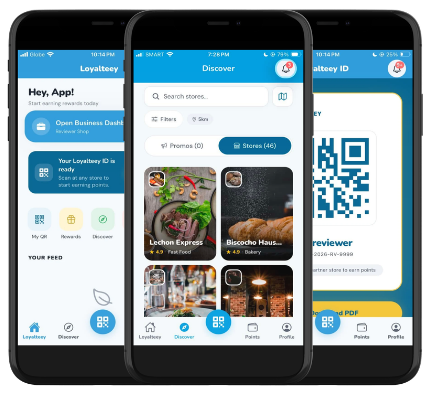
- When a suki buys, they open the app, scan, and points land in their wallet.
- Set one reward: ₱500 lifetime spend = ₱20 off next purchase, or a free sachet of coffee.
- The owner sees, on a phone, who the top 10 sukis are this month.
That is the whole flow. No card, no Wi-Fi-dependent POS, no software training.
The compounding effect
A tindahan in Antipolo started doing this in January. By March, the owner could point to four sukis who used to split purchases between her store and the one across the street — and were now coming only to her. The reason was small: they had points building up, and switching shops meant starting over.
That is exactly how a mobile wallet loyalty program creates lock-in without feeling pushy.
One QR ID, every store
The Loyalteey app gives every suki one QR ID that works at every participating tindahan, café, or salon. Points stay per store — earned at your tindahan, redeemed at your tindahan — but the customer never has to install a new app to join the next shop. Free tier covers everything a single store needs.