The ROI question on a small business loyalty app gets asked the wrong way. Owners usually ask "will this make me more money" and expect a yes/no. The better question is "which specific number will move, and by how much." Once you reframe it, the math becomes simple and the program becomes accountable.
The three numbers that actually matter
Forget vanity metrics like signups and total points issued. The three numbers that decide whether a loyalty app pays for itself are:
- Visit frequency — how often a member comes vs a non-member
- Average ticket size — whether members spend more per visit
- Retention — whether members come back after 30 / 60 / 90 days
If any one of these moves meaningfully, the program pays for itself. If all three move a little, the program is transformative.
The break-even math
Take your monthly subscription. Divide by your average ticket. That is how many extra visits you need per month to break even on the tool itself.
Example: ₱299/month subscription, ₱200 average ticket. 299 ÷ 200 = ~1.5 extra visits per month. Across all your customers combined. That is a very low bar.
The cost of the rewards themselves is separate. A reasonable rule: if your top reward costs you ₱100 to give away and a customer earned it after spending ₱5,000 with you, your reward cost is 2% — well inside normal marketing spend.
Where the upside actually comes from
Most ROI on a loyalty app does not come from forced repeat visits. It comes from three quieter places:
1. Birthday revenue
Customers who get a birthday message visit on or near their birthday. Most bring at least one other person. That is incremental revenue you would not have gotten without the data.
2. Reduced churn
You see a lapsed regular before they fully ghost you. A small nudge wins back a percentage of them. Even saving 5 customers a month who would have churned forever is real money over a year.
3. Better decisions
The data lets you stop guessing. You stop spending on promotions that did not move repeat behavior. You stop comping items to people who would have paid full price. The ROI shows up as money you did not waste.
What to measure in the first 90 days
Pick one number to watch each month:
- Month 1: signup rate at checkout — target 30–50% of transactions
- Month 2: second-visit rate — what % of members come back within 30 days
- Month 3: birthday redemption rate — should be 40%+ once data is collected
Do not chase all three at once. Fix the leakage in whichever number is weakest.
A small example
A neighborhood salon launches with ₱299/month Pro. After three months: 220 members, average member visits 2.4× a month vs 1.1× for walk-ins, average ticket up 8% because members add a treatment more often. The math is not subtle. The subscription is a rounding error against the incremental revenue from a single power-user segment.
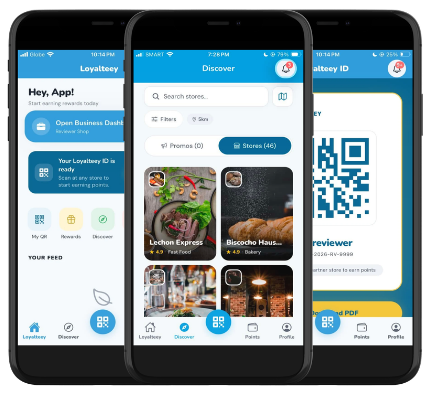
The Loyalteey app gives owners those three numbers — frequency, ticket, retention — in plain language inside the business dashboard, so the ROI question stops being a guess and becomes a monthly checkpoint.