Most loyalty programs aren’t about “points.” They’re about finally stopping the guessing. The best part is you don’t need a spreadsheet obsession to get useful customer insight from a small business loyalty setup.
Start with the cleanest data: one customer, one Loyalteey ID
If your “loyalty data” lives on paper punch cards, you don’t have data. You have confetti. Honestly, weekend punch cards are a waste for learning because they tell you nothing about who came in, what they like, or whether they ever returned.
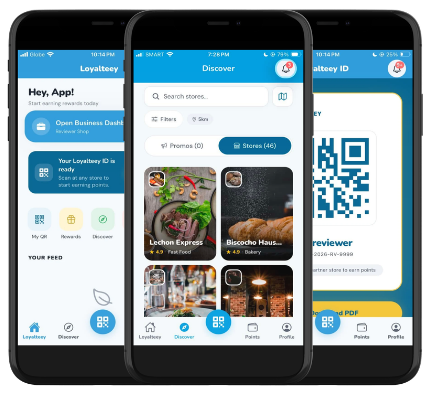
Loyalteey fixes the basic problem first: customers use a one-QR Loyalteey ID that works across participating stores, and each store runs its own program with per-store points. So you can recognize returning customers in your shop (without mixing your data with anyone else’s), and customers don’t juggle ten different cards.
What you get right away is simple and powerful: repeat visits become visible. And once visits are visible, you can improve them.
Read your Dashboard Insights like a shop owner, not an analyst
Loyalteey’s dashboard insights are where the “data goldmine” part actually becomes usable. Don’t start by looking for fancy charts. Start with questions you already ask yourself during a slow hour.
- Who’s slipping away? Look for customers who were active, then went quiet. That’s your easiest win.
- What’s the real repeat cycle? A café might see regulars every 2–4 days, a salon every 4–8 weeks. You want your rewards timing to match that reality.
- Which reward gets redeemed? Redemptions tell you what customers value, not what you think they should value.
- Are promos pulling their weight? If you ran a multiplier or blast and nothing moved, good. Now you know what to stop doing.
A quick mental trick: compare a normal Tuesday at 3pm to your best hour of the week. If the gap is huge, your loyalty program should be doing more work on the quiet shifts.
Use a rewards ladder to learn what customers actually want
“Spend more, get more” is fine. But if your rewards are spaced badly, you’ll learn the wrong lesson (like “customers don’t care”). Loyalteey’s rewards ladder gives you multiple rungs so you can watch how people behave at different thresholds.
Here’s a practical setup you can try this week:
- Low rung: something reachable fast, like a small add-on or upgrade. This teaches you what new customers respond to.
- Middle rung: a reward that nudges a better basket (think “free topping” instead of “$ off”).
- High rung: a treat worth saving for, so you can see who your real regulars are.
Watch two numbers: how many people hit the first rung, and how many keep going. If lots of people stall after the first reward, your ladder may be too steep, or the next reward isn’t tempting.
Segment customers with brackets (tiers), then act on it
You don’t need a complicated CRM to segment. You need a few simple groups you can treat differently. Loyalteey’s tiers/brackets let you do that without turning your loyalty program into homework.
A straightforward bracket strategy looks like this:
- New: first week or first couple of visits. Your job is to get the second visit.
- Regular: consistent repeat customers. Your job is to keep them happy and noticed.
- VIP: your top regulars. Your job is to avoid boring them (and avoid discounting them too hard).
Then you do one thing differently for each bracket. Not ten things. One.
Example: a neighborhood café spots that “New” customers often disappear after visit two. So it adds a small “second-visit nudge” reward on the ladder, and gives “Regular” customers an occasional point multiplier on slower afternoons. The VIPs? They get early access to a new seasonal drink as a reward option, not a discount.
Plan-wise, this is where moving beyond the basics helps. Start on Free to get your first program live. When you’re ready to run more structured segments and more frequent outreach, the paid Pro tier and Pro Plus make that easier (especially if you’re doing multiple promos and tracking how different groups respond).
Run point multipliers and blasts/promos like small experiments
Promos are only “random” when you don’t measure them. Loyalteey gives you two clean levers: point multipliers and blasts/promos. Use them like experiments with a start, an end, and a single goal.
Try this simple test structure:
- Pick one slow window (Tuesday 2–5pm, or weekday mornings).
- Choose one offer: 2× points, or a targeted message to a bracket.
- Decide the “win”: more visits in that window, or more redemptions of a specific reward.
- Stop after one week and check results in your dashboard insights.
One scenario that works in real life: a high-street salon notices gaps between appointments. They run a short blast/promo to “Regular” customers offering 2× points on midweek add-on services. If bookings move, great. If not, they didn’t burn a month learning nothing.
Keep it simple. And please don’t run “10% off everything” as your default loyalty strategy. You’ll train people to wait for discounts, and you’ll learn almost nothing about preference.
If you have more than one location, don’t guess across branches
Multi-branch businesses have a special problem: the owner thinks one location is “doing fine,” another is “struggling,” and nobody knows if it’s foot traffic, staff habits, or offer design.
Loyalteey supports branches and staff accounts, which matters for data quality. When every scan is handled properly (and not scribbled on a sticky note), you can compare locations fairly. Same rewards ladder, same brackets, same week. Different outcomes? Now you have something real to fix: training, hours, or a local promo.
On the customer side, the customer wallet keeps rewards and points easy to check, which reduces the “I forgot my card” problem and keeps your data consistent. Less friction, cleaner insight.
If you want a loyalty program that actually teaches you something, start small and stay honest about what you’re trying to learn. Loyalteey is free to start, and your first bracket takes about 5 minutes to set up. Then invite customers to download Loyalteey from the App Store or Google Play and scan their one-QR Loyalteey ID on every visit.